
Healthcare website design for the patient deciding whether to call.
We design and build websites for medical practices, clinics and health organizations, written for the person who is deciding whether to call and may be worried when they do.
What should a healthcare website do?
A healthcare website should answer a new patient's practical questions in plain language: do you treat this, do you take my insurance, what happens at the first visit, and how do I reach someone. Everything else on the site supports those answers.
Here are the six questions we plan a practice site around, and how the Audiology Center of Burbank site answers them.
-
Do you treat what I have?
People arrive with a symptom or a child's test result, not your internal service list. Audiology Center of Burbank separates adult and pediatric hearing care, then covers evaluations, tinnitus, hearing aids and newborn testing in terms a parent or an older adult can follow.
-
Do you take my insurance?
Give this its own page, name the plans you accept, and say what someone should do if theirs isn't listed. Then decide who keeps it current, because an out-of-date insurance page sends people to your front desk with the wrong expectation.
-
What happens at the first visit?
A first-visit page lowers the stakes of booking: what to bring, how long it takes, what happens in the room and what comes next. Your staff already answer these questions on the phone, so that's where the page starts.
-
Can someone help me in my language?
"Se habla español" appears across the Audiology Center of Burbank site, and an "Español" link in the main navigation opens a Spanish-language section of the contact page. Say what your office can really do, then make it easy to find from every page.
-
How do I reach you?
Every page on that site keeps the phone number and a "Request a Visit" button in the header, with click-to-call links and a Google Maps directions link. Someone who is ready to call shouldn't have to look for the number.
-
Can I believe what I'm reading?
The homepage credits its explanation of how hearing works to the NIDCD, and the footer says which photographs show the real team and office and which imagery is illustrative. Small details like these tell a patient how you treat the truth.
Guides your clinicians would hand to a patient.
Health content is held to a higher standard than a blog post. Before a guide goes up, we want to know where each claim comes from and who on your team signed off on it.
| A good guide has | Why it matters | Where you can see it |
|---|---|---|
| Named sources | Readers and your own staff can check the claim, and you can update it when the source changes. | The how-hearing-works steps, with sources credited to the NIDCD |
| Clinician approval | We can shape a sentence. Only your team can decide whether it's medically right for your patients. | Part of how we'd plan your content, whoever drafts it |
| A way to find it | A parent looking for one answer won't read a whole library. Search and topic filters get them there. | The resource library, filtered by hearing health, for parents, hearing technology and your visit |
| A way to keep it | Patients share guides with family or bring them to an appointment. | An "On this page" outline and a "Print this guide" option on long guides |
| Links to the official form | When a state program has its own paperwork, send people to the source and not to your own copy of it. | A guide to California's hearing aid coverage program for children, linking to the official state forms |
A contact form should ask for less than you'd think.
Most practice sites need a form for one thing: getting someone to call a person back. So we keep it short, and we tell visitors what to leave out before they start typing.
What a general form can ask
- A name and a way to reach the person
- The best time to call
- Whether they're a new or returning patient
- A short, general message
What it should leave out
- Symptoms, diagnoses and test results
- Medications and treatment history
- Insurance member numbers and dates of birth
- File uploads of records
An honest note on HIPAA. The U.S. Department of Health and Human Services says the HIPAA Rules apply to covered entities and business associates (opens in a new tab), and that a covered entity working with a business associate needs a written contract or other arrangement with it. Whether your practice is covered, which vendors count and what you need from them all depend on your practice and its vendors, so a website design can't answer that on its own.
The practical part we can help with: a website form is not the place for protected health information unless it has been set up for that, from the form tool to the inbox it delivers to. Analytics, chat widgets and booking embeds are vendors too. We'll list what's on your site and where submissions go, so your compliance lead or attorney can review it. This is general information, not legal advice.
When a tool truly needs clinical detail, the interface should state its limits. AI Pathology Consultation (opens in a new tab), a health tech workspace in our portfolio, tells users to enter de-identified case details only and not to upload patient identifiers, and says it does not replace a pathologist's judgment. If you need a portal or a clinical tool, start with our web app development page.
Your patients may be the people who need it most.
A hearing practice serves people who can't rely on sound. A pediatric office serves tired parents on phones. An older patient may zoom every page to read it. Accessibility decisions affect whether these people can use your site at all, so we treat them as part of the design from the start.
The Audiology Center of Burbank site has a dedicated accessibility page. It explains keyboard navigation, the skip link, zoom and reduced-motion support, and how to ask the office for help or communication accommodations. That last part matters most, because a statement is only useful when a real person is behind it.
We won't promise that any site is free of accessibility problems, since content changes and no check catches everything. We will build with accessibility in mind and be straight with you about what still needs work.
Health and wellness work you can check
The Audiology Center of Burbank case study lists what we could see on the live site, nothing more.
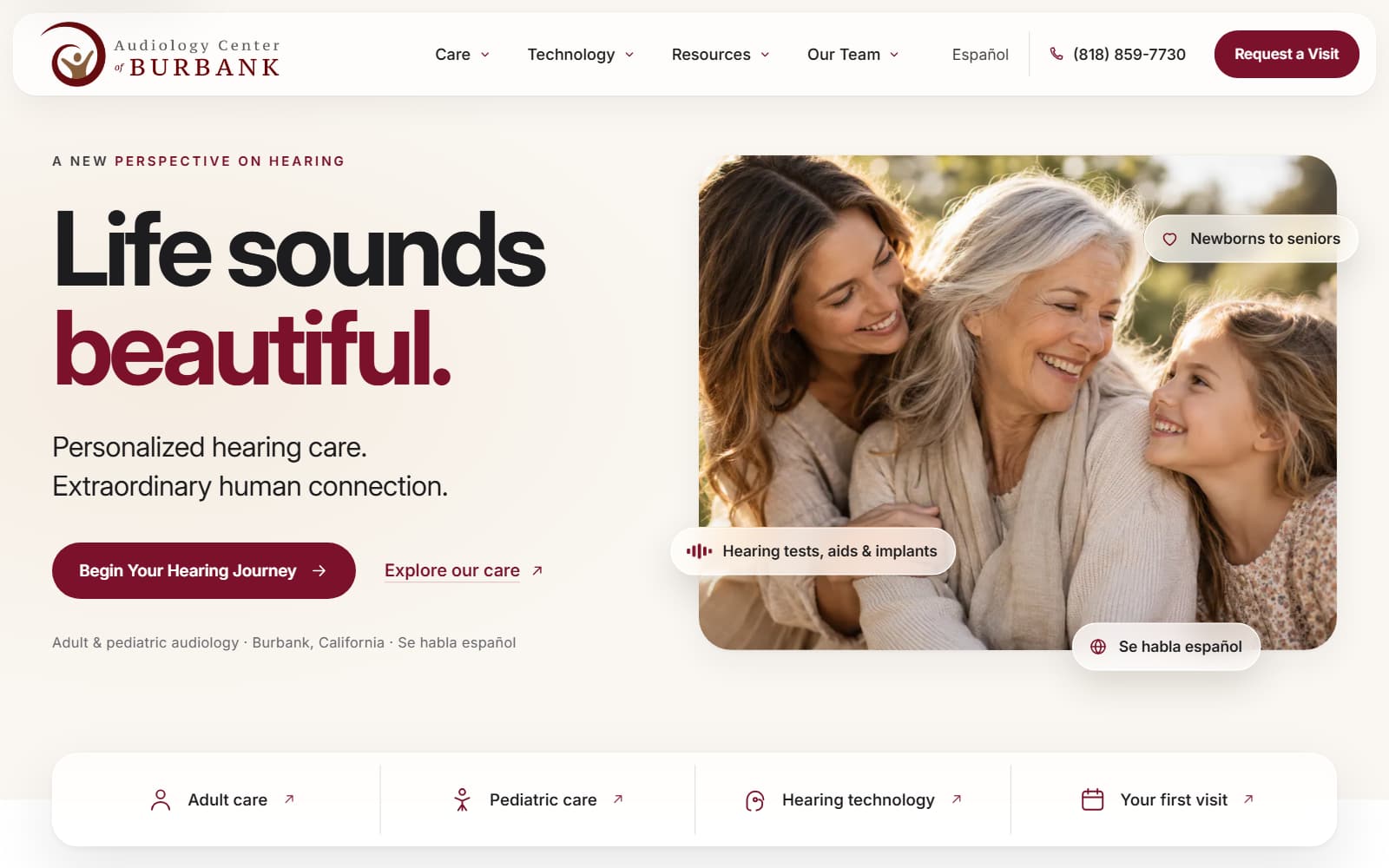 Healthcare
Audiology Center of Burbank
Care guides, a searchable resource library and Spanish-language help for an adult and pediatric audiology practice.
Read the case study →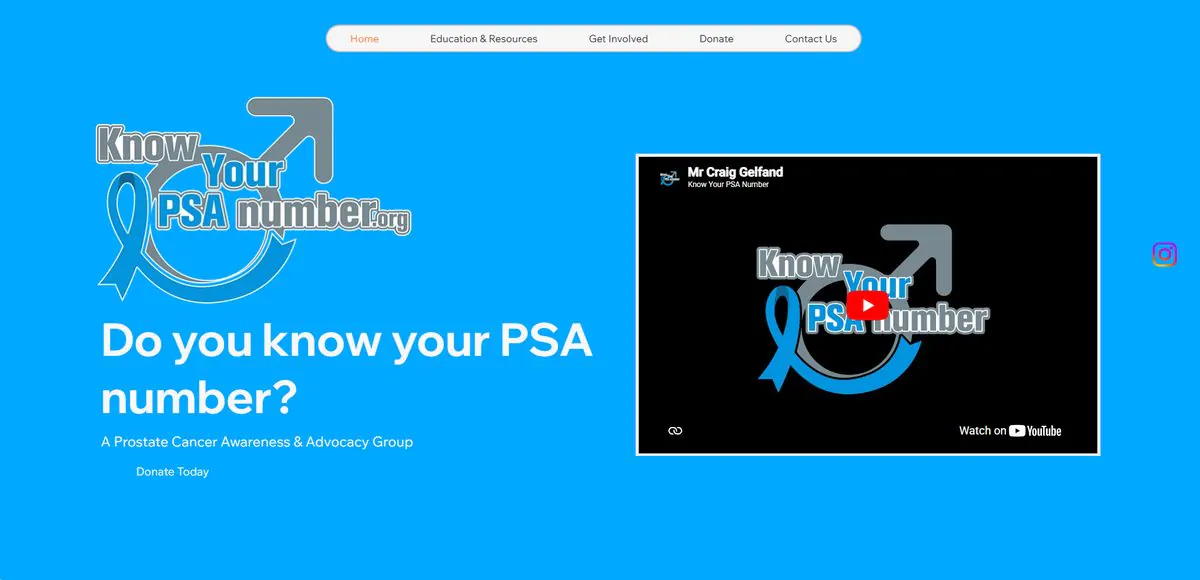 Health
Know Your PSA
A prostate cancer awareness nonprofit in the San Fernando Valley, with education and resources, an FAQ page, a media gallery and a contact form.
Visit the live site → (opens in a new tab)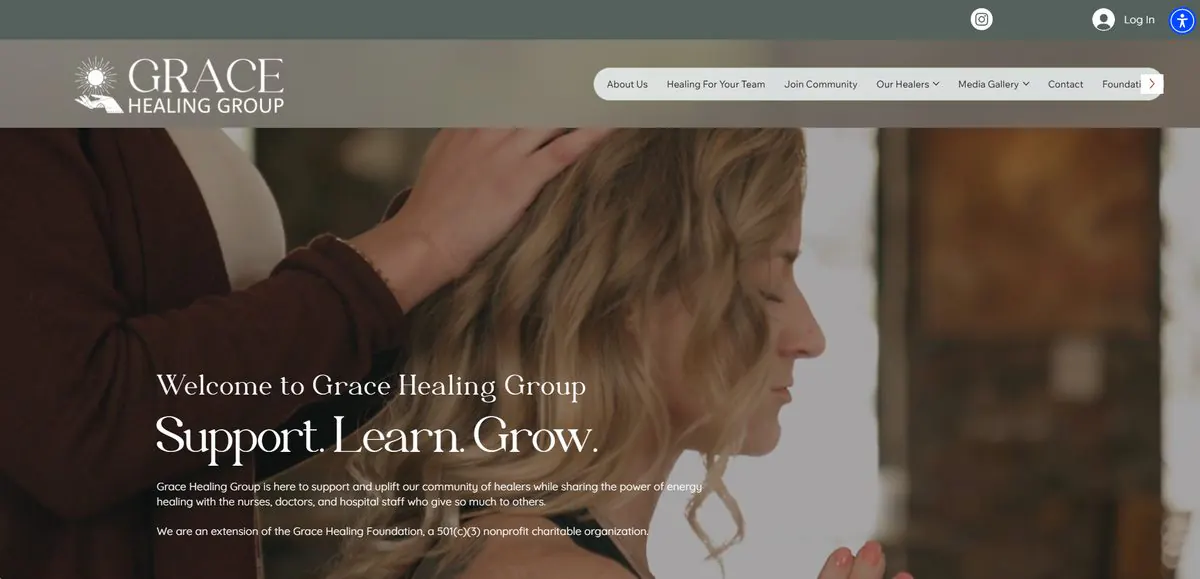 Wellness
Grace Healing Group
An energy healing community with workshops, in-person and online clinics, and programs for hospital staff. The footer credits Media City Design.
Visit the live site → (opens in a new tab)Founder-led and based in Burbank since 2021. You work directly with the people doing the work.
Straight answers.
A website alone can't settle that, because HIPAA obligations depend on your practice, your vendors and how patient information moves between them. The U.S. Department of Health and Human Services explains who the HIPAA Rules apply to. We can keep protected health information out of a general contact form and tell you where each form sends its data, so your compliance lead or attorney can review it. This is not legal advice.
No, not unless the form and everything behind it have been set up to handle protected health information. A general form works better when it asks for a name, a way to reach the person and a short general message. The Audiology Center of Burbank form asks visitors to keep messages general and leave out medical details.
No, audiology is our most detailed healthcare case study, not the limit of the work. Our portfolio also includes Know Your PSA Number, a prostate cancer awareness nonprofit, Grace Healing Group, an energy healing community, and AI Pathology Consultation, a health tech workspace. The questions patients ask change by specialty, so we plan each site around yours.
Yes, as long as your clinicians review and approve every medical statement before it goes live. Copywriting is an optional add-on to a build. If your team prefers to write, we can shape the drafts into pages people can follow, with the sources named on the page.
Yes, and we'd start by asking who answers the phone in that language. A translated section promises help, so it should match what your office can really do. On the Audiology Center of Burbank site, an "Español" link opens a Spanish-language section, and that section is marked up as Spanish so screen readers switch pronunciation. You'd supply or approve the translation.
Our website cost calculator puts a site of up to five pages on a proven template at about $2,300 to $2,900, and a 6 to 10 page site with a custom design at about $4,100 to $5,200. Custom apps start at about $10,800. Most small business sites take 3–6 weeks, and your proposal sets one fixed price for your scope.
Keep exploring
Rebuild an older practice site and plan redirects so existing links keep working.
Portals, dashboards and internal tools, scoped around who may see what.
Help AI search tools read and describe your practice correctly.
Tell us what your patients keep asking.
Those questions are a good place to start. Bring them to a free consultation, and we'll work out which pages should answer them.