
Professional services websites that hold up to a close look.
We design and build websites for attorneys, consultants, coaches, construction advisers and other firms whose clients are really buying judgment. Those clients are hard to impress and quick to check you out.
What makes a professional services website credible?
A professional services website earns credibility by being specific: who you work with, what you do for them, who will do the work and what they've done before. Prospects often arrive from a referral and use your site to check it, so vague claims cost you more than a plain design does.
Before you sign off on a new site, read it the way a skeptical prospect would. We use this checklist.
-
It says who you work with
"Helping nonprofits secure the funding they deserve" tells a nonprofit director they're in the right place. "Solutions for organizations" doesn't.
-
It names the work in your clients' words
People search for "child custody" or "contractor bid analysis." Name those services outright, not just the broad category they fall under.
-
The bio reads like a career, not a slogan
Use dates, roles, schools and places, with a real photo. Someone hiring you for years of experience wants to see where those years went.
-
Credentials can be checked
A license number, a named degree or a named certification gives a careful reader something to verify. Gibbons Construction Consulting lists its license number on its site.
-
The next step matches how you sell
A law office offers a consultation. A cleaning company offers an estimate. A coach invites a conversation. Pick the one that fits, and use the same words every time.
-
Nothing promises what you can't deliver
Guaranteed outcomes read badly to experienced buyers, and some fields restrict them. Saying how you work is safer and usually more persuasive.
What this looks like across different practices.
Each of these sites answers the first question its own clients would ask. All of it is on the live sites today.
| Field | Client | How the site earns trust |
|---|---|---|
| Law | T. Murf's Law, the Law Offices of Timothy M. Murphy, Burbank | Practice areas named one by one, and a bio running from Loyola Law School through the Los Angeles County Public Defender's office to Superior Court Commissioner |
| Construction consulting | Gibbons Construction Consulting, Burbank | Services spelled out, from owners' and HOA representation to contractor selection and bid analysis, with a license number on the site |
| Nonprofit consulting | Third Wheel Cause Consulting | A homepage that names its audience and the problem it solves: funding for nonprofits, through grant writing and fundraising support |
| Coaching | Kelly Pena | A Certified Happiness Coach who explains nearly 30 years as an executive at American Express, Hilton Hotels and Disney, and why she changed course |
| Academia | Dr. Joan Marques | Her doctoral degrees up front, with sections for papers and articles, projects and organizations |
| Commercial services | MT Commercial Cleaning | Each service listed, the kinds of buildings it serves, a Request an Estimate button and a separate page for job applicants |
Ask enough to reply well, and no more.
A good intake form saves you a wasted call, and a long one loses the person who was ready to hire you. Here's what we'd start with in three common cases.
For a law office
Name, contact details, type of matter, how soon. Add a line saying what the form does and doesn't do, in the wording your counsel approves, and ask people not to send confidential details.
For a consultant or adviser
Organization, role, what they're trying to get done, any deadline. A question about size or stage can show whether you're the right fit before anyone books a call.
For a coach or solo practice
Keep it short and warm: name, email and an optional note about what's going on. Personal topics are often easier to raise in a conversation than in a form field.
A note for regulated professions. Attorney advertising rules vary, and other licensed fields have their own rules about license numbers, testimonials and claims. Have your firm's counsel review the site before launch. We'll build in the notices and disclaimers they ask for, but we aren't lawyers and can't tell you what your rules require. This is general information, not legal advice.
Firms and practices we've built for
These sites all credit Media City Design in the footer, so you can open them and see for yourself.
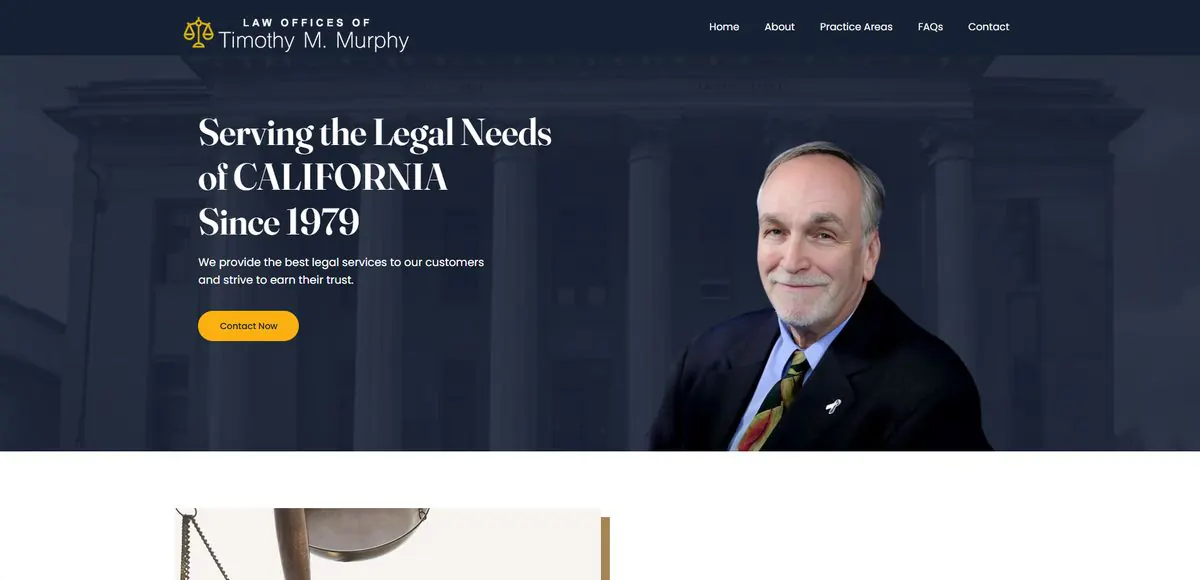 Legal
T. Murf's Law
The Law Offices of Timothy M. Murphy in Burbank: mediation, family law and criminal defense, with an attorney bio, FAQs and a contact form.
Visit the live site → (opens in a new tab) Construction
Gibbons Construction Consulting
An owner's representative firm in Burbank, with services listed by name, a team page and its license number on the site.
Visit the live site → (opens in a new tab) Consulting
Third Wheel Consulting
Grant writing and fundraising support for nonprofits. The homepage says plainly who it helps, and offers a free consultation.
Visit the live site → (opens in a new tab)Founder-led and based in Burbank since 2021. You work directly with the people doing the work.
Straight answers.
Specifics make it credible: who you work with, what you actually do, who will do it and how to check your credentials. A polished design helps, but a careful prospect is looking for details a general template wouldn't have. A clear bio and a license number do more than a page of adjectives.
No, that decision belongs with your firm's counsel, because attorney advertising rules vary and we aren't lawyers. We can build in the disclaimers, notices and wording your counsel asks for, and give them the full site to review before launch. This is general information, not legal advice.
Possibly, but check the rules for your profession first, along with the client's permission. Some regulated fields restrict testimonials or past results, and the limits differ by jurisdiction. Your counsel or licensing body can tell you what applies to you, and we'll build the page to match.
An intake form should ask only what you need to reply well, and usually that's a name, contact details, the type of matter and how soon it's needed. More fields can help when they filter out poor fits, but every one costs you some people. Regulated firms should also tell people not to send confidential details through the form.
No, a small practice can often say everything in about five pages: home, services, about, a few common questions and contact. T. Murf's Law, for example, has a navigation of Home, About, Practice Areas, FAQs and Contact. We'd add pages only when you have something specific to put on them.
Our website cost calculator puts a site of up to five pages on a proven template at about $2,300 to $2,900, and a 6 to 10 page custom design at about $4,100 to $5,200. Most take 3–6 weeks. After a free consultation, you get one fixed price for your scope.
Keep exploring
Rewrite and rebuild an older site, and plan redirects for your existing links.
Technical, on-page and local SEO, reported from your own Search Console data.
Logos, brand identity and print pieces that match the site.
What would a careful client want to know?
Book a free consultation, and bring the question prospects ask you most. We'll start the site from there.