
Restaurant and catering websites built around how people order.
We design and build websites for restaurants, cafes, caterers and food service companies. We start by asking how your customers actually order, because a quote request and a lunch order need very different pages.
Small things customers check before they come.
-
Hours and location
Put them on the homepage and in the footer, with a directions link and a phone number people can tap. Pinkelicious Catering repeats its Burbank address with a "Get directions" link in the footer. Then keep your holiday hours current in the same places, including your Google Business Profile.
-
Photos of your real food
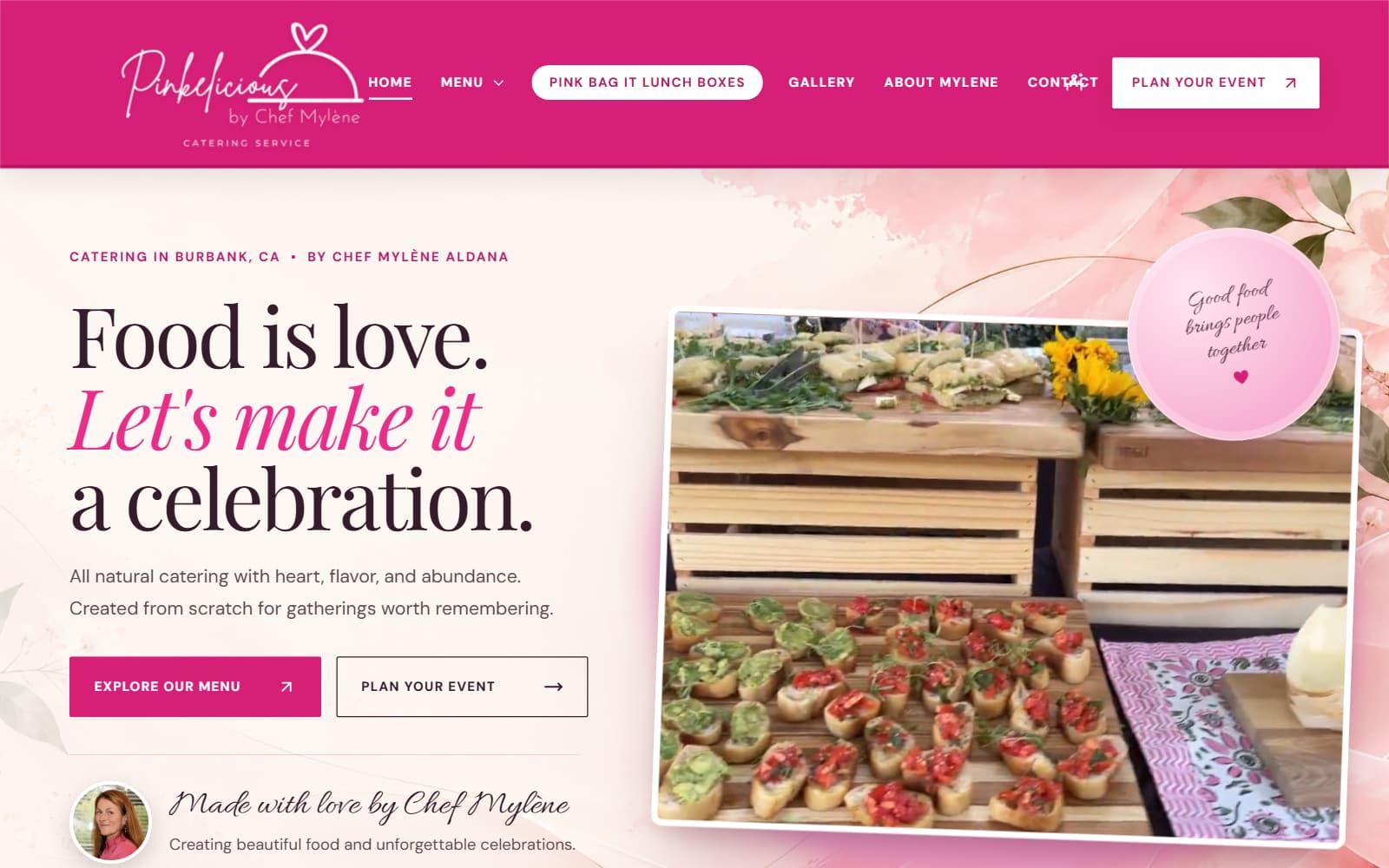
A stock photo of someone else's dish sets an expectation your kitchen never agreed to. Pinkelicious Catering has a gallery of its real spreads and an "About Mylène" page in the chef's own words, so visitors know who's cooking.
-
Seasonal updates
Holiday menus, summer specials and event packages are only useful while they're true. Decide before launch who changes them: your staff on a site they can edit, or us through a maintenance plan. Then give each seasonal section an end date, so last December's menu doesn't greet someone in March.
-
The answers people call about
Service area, minimums and how much notice you need all belong in writing. The Pinkelicious Catering FAQ covers service area, lunch box pricing and notice, and structured data describes the business and those questions to search engines.
Sometimes the menu isn't the point.
Metropolitan Culinary Services runs food and beverage locations at airports, with Hollywood Burbank Airport as its home base for more than three decades. Its site explains who the company is, where it operates and how it works with its community, with contact details for its Burbank and Kalispell offices. Menus aren't part of it. A second site serves its Kalispell, Montana office.
Chef Sofia Sedrakian's private chef site has a different job: it explains three levels of service, from corporate buffets to table service to a chef cooking a multi-course meal in your home. That's why we ask what you sell and to whom before we talk about pages.
Food businesses we've built for
Pinkelicious Catering is the full case study. These businesses need different things from a website, so their sites look nothing alike.
 Catering
Pinkelicious Catering
A searchable catering menu, an event-menu builder, quote requests and online lunch box ordering for a Burbank caterer.
Read the case study →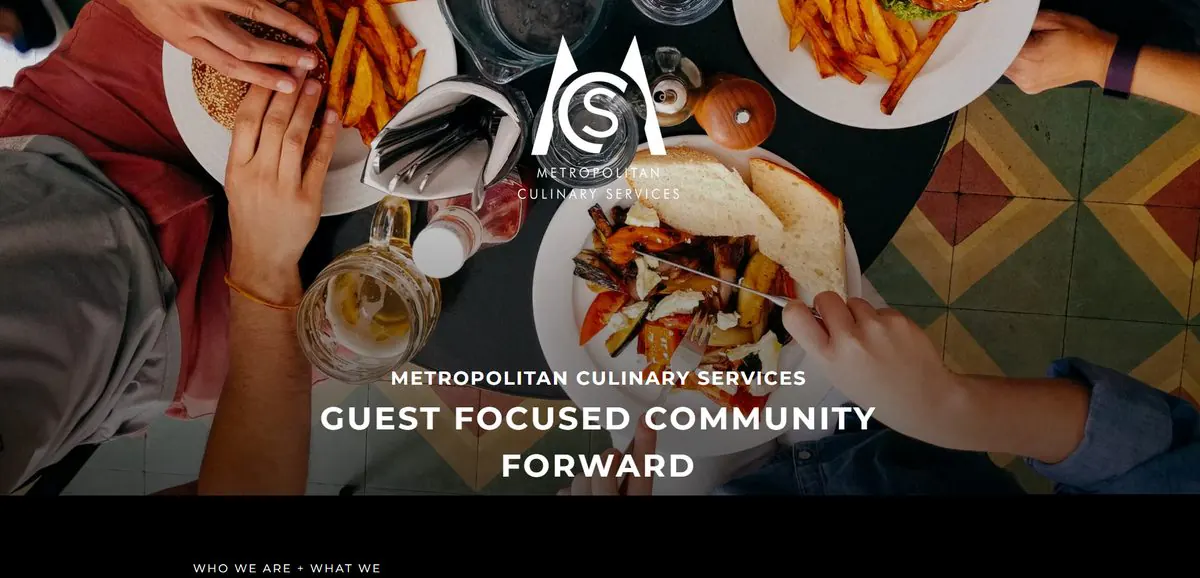 Food service
Metropolitan Culinary Services
A company site for a food and beverage operator based at Hollywood Burbank Airport: who it is, where it operates and how to reach each office.
Visit the live site → (opens in a new tab)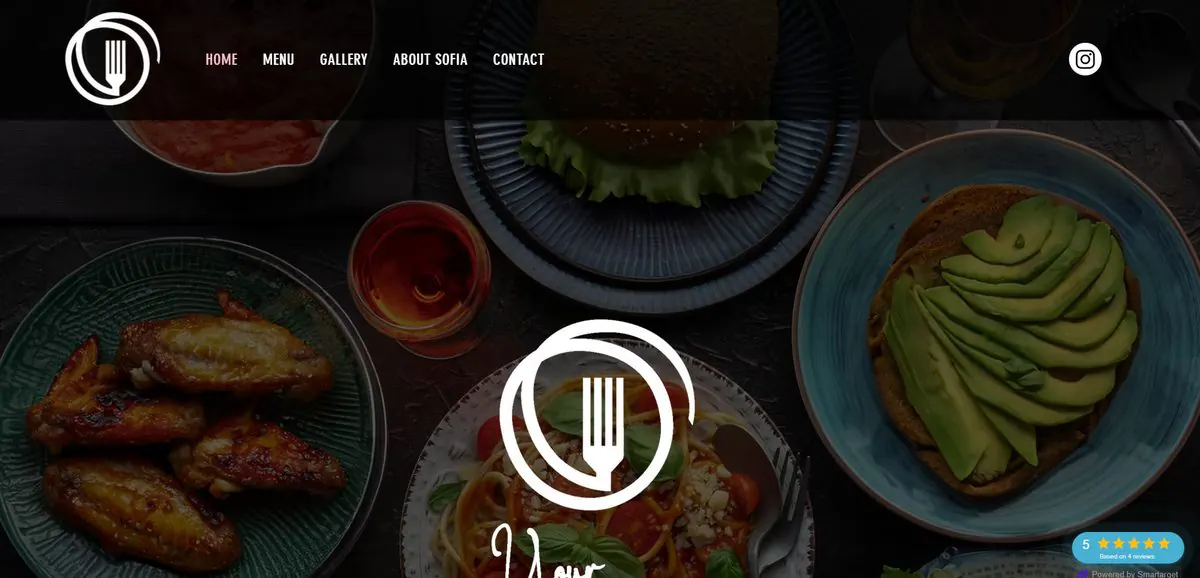 Real Estate
Your Realtor Chef Sofia
A private chef site for Chef Sofia Sedrakian in Los Angeles, with a menu, a gallery and three levels of event service.
Visit the live site → (opens in a new tab)Founder-led and based in Burbank since 2021. You work directly with the people doing the work.
Straight answers.
No, your main menu should be real text on a web page. Text reads properly on a phone, works with screen readers, can be read by search engines, and can be corrected in a minute when a price changes. If you'd like a printable version as well, offer the PDF as a download beside the page.
Not always: you need it when customers can order something standard at a set price without talking to you. Event catering usually isn't like that, which is why the Pinkelicious Catering site quotes events and only takes payment for its lunch boxes. If most of your orders start with a phone call, a good quote form may do more for you than a cart.
Yes, for orders with a fixed price and clear rules. Pinkelicious Catering customers pay for lunch boxes through Stripe's secure checkout, and the form enforces the 10-bag minimum and only offers delivery dates at least two days out. For quoted events, the site says plainly that nothing is charged and the date isn't held until the chef confirms.
Yes, if we plan for it from the start. A site on Wix Studio can be set up so your staff edit dishes and prices themselves, and a custom-coded menu can be built to work the same way when the scope allows it. If you'd rather send changes to us, a maintenance plan covers content updates each month.
Real photos of your own food beat polished stock images, and they don't always require a full shoot. Pinkelicious Catering has a gallery of real spreads. A custom brand shoot is an optional add-on in our calculator, and we'll tell you honestly if the photos you already have will do the job.
Our website cost calculator puts a site of up to five pages on a proven template at about $2,300 to $2,900, a 6 to 10 page custom design at about $4,100 to $5,200, and online stores from about $5,900. Small sites usually take 3–6 weeks and stores 6–10 weeks.
Keep exploring
Order flows, gift cards and checkout, on Wix or built custom with Stripe.
Logos, printed menus and graphics that match your site.
Monthly plans for menu changes, seasonal updates and security.
Show us the menu you have now.
A photo, a PDF or a stack of index cards is fine. On a free consultation, we'll work out what belongs on the page and how people should order from it.